Guide · Nov 29, 2026
Can you get paid to train for data center work? Yes. Here's what's real.
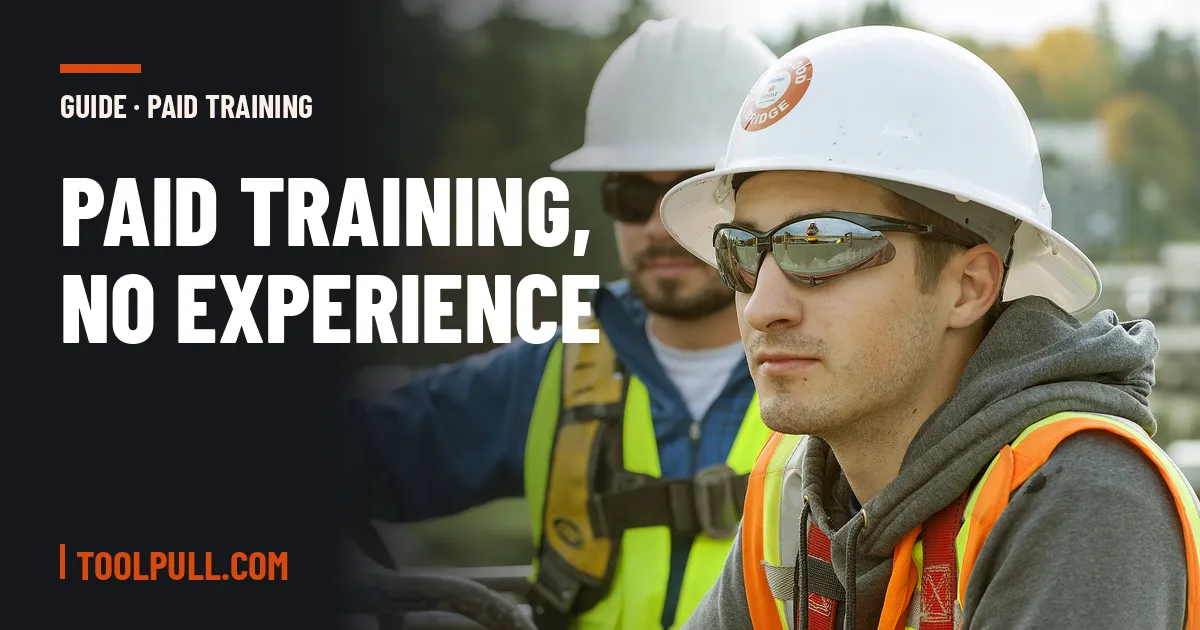
Paid training for beginners in data center work exists. The main door is still a paid apprenticeship. Meta and AWS run short paid programs too. Here is what pays you, what only covers tuition, and what can screen you out. Every program was checked on its own page on Nov 28, 2026.
Someone in our Data Center Jobs Hub group asked a simple question.
Is there any paid training for people who are just getting started?
Short answer: yes.
Longer answer: most of it doesn't look like a short boot camp with a logo on the hoodie.
The oldest route still works the best. You get hired as an apprentice, you get a paycheck for the hours on the job, and you go to class on the side.
There are also a couple of newer company programs that pay you while you learn data center work. I'll get to those.
The ground rules
I only listed programs I could confirm on their own official pages.
If a page didn't publish a wage or a stipend, I'm not going to guess one.
And if the training is free but doesn't pay you, I put it in its own section near the bottom. Free school is useful. It's not the same as a paycheck.
The short list
- A paid apprenticeship. Electrical, pipe, sheet metal, carpentry, ironwork, laborers or operating engineers. You apply locally and get paid on the job.
- Meta's America's Workforce Academy. About four weeks, no experience, a daily stipend, and a conditional job offer from a Meta contractor.
- AWS Work-Based Learning Program. A 12-month paid data center trainee job. No experience needed.
- Contractor apprenticeships. Faith Technologies, Rosendin and Mortenson all say they pay you while you train.
- Veterans. Helmets to Hardhats is the door into those paid apprenticeships.
1. The main door: a paid apprenticeship
This is open in the most places.
You apply to a local program, not to one national website. For electrical work that's usually an IBEW/NECA program run through the Electrical Training Alliance, or a merit-shop program through IEC or ABC.
You work during the day. You go to class at night or in blocks. You get paid for the hours on the job.
IBEW/NECA electrical apprenticeship
There's no national application. Every program is run by a local training center, and each one sets its own dates and rules. Find yours with the Electrical Training Alliance locator.
The Alliance lists these as the typical requirements: minimum age 18, a high school education, one year of high school algebra, a qualifying score on an aptitude test, and drug free. Your local can add more.
On pay, it's paid on the job. IBEW Michigan's page says apprentices get paid week one, with tuition subsidized.
Here's what two real 2026 pay schedules show for a first-year electrical apprentice:
- Boston: 40% of the journeyman rate, which is $27.51 an hour on a $68.78 journeyman rate. Rate sheet, effective Sept. 1, 2026.
- Albany, New York (IBEW Local 236): 40% of a $52.00 journeyman rate, which is $20.80 an hour. Wage schedule dated June 1, 2026.
That's those two locals, not a national rate. Yours can be different.
How it usually goes: find your local, watch for the application window (many only open it a few times a year), send your documents, take the aptitude test, interview, then get ranked and wait for a spot.
IEC and ABC (the non-union route)
IEC runs a four-year electrical apprenticeship with more than 70 training locations. You work for an IEC contractor and go to class in the evening.
IEC's own FAQ says starting wages are typically 50% of a journeyman's rate. Its example is a $16 start on a $32 journeyman rate. No prior experience is needed. IEC apprenticeship page.
ABC chapters run registered apprenticeships in more than 20 trades. Use the ABC apprenticeship locator, then ask the chapter or contractor what the starting pay is. ABC's national page doesn't list one.
Pipefitters, sheet metal, laborers, ironworkers, carpenters, operators
Same idea. You apply locally, you get paid for the job-site hours, and your pay goes up as you move through the program.
- United Association (plumbers, pipefitters, HVACR, welders). The UA says its apprenticeships combine paid on-the-job training with classroom instruction. Find a local.
- SMART sheet metal. One local, SMART 18 in Wisconsin, says you get a paycheck from day one and lists about $40,000 a year for a first-year apprentice. That's their number, not a national one.
- LiUNA laborers. Its training site says working apprentices start making money and gaining benefits right away.
- Ironworkers. The page says you earn a union wage and benefits while you learn.
- Carpenters (UBC). You contact your regional council. One council's page says tuition-free apprenticeship with regular raises.
- Operating engineers (IUOE). Earn while you learn, per the union. Ask your local whether the classroom weeks are paid. Some locals have unpaid training blocks.
None of those pages publish one national starting wage. Ask the local.
2. Meta's America's Workforce Academy
We covered this one in detail on Nov. 11. Here's that article.
The short version: it's a boot camp for new people, built around data center and related construction work. No prior trade experience is required, and it's open to people in all 50 states.
Meta's page says Meta pays for tuition, airfare, lodging and a daily stipend while you train. Meta and ABC say it takes four weeks. The 2026 training sites are Baton Rouge, Indianapolis, Houston and Columbus, Ohio.
When you're accepted, a Meta contractor partner makes you a job offer for a Meta construction site, as long as you finish. That's per Meta and ABC.
Here's the catch. Meta says it has no say in hiring or pay. Each contractor decides who it hires and what it offers.
Neither Meta nor ABC publishes the stipend amount or the starting wage. A Texas workforce board's event listing described the training as $25 an hour, but that isn't from Meta or ABC. Ask before you count on it.
Meta says its first class graduated in August.
3. AWS Work-Based Learning Program
This one is a job with training built in.
AWS calls it a 12-month paid training program in data center operations. The tracks include operations technician, install technician, decommissioning technician and logistics specialist. People who finish and pass their assessments are promoted into their role at an AWS data center.
On Nov. 28 I found a live AWS posting for 2027 trainee seats at its Oregon sites in Boardman, Hermiston and Umatilla. Here's the posting. It can close at any time.
It lists starting pay of $23.07 to $40.48 an hour, depending on the site and the person. That's Oregon only. Other AWS sites can pay differently.
What it asks for:
- A high school diploma or equivalent, and you must be 18 or older.
- Willingness to work shifts for 24/7 operations.
- The ability to lift up to 40 pounds, climb ladders and work in noisy, cramped spaces.
- A valid driver's license and your own reliable vehicle. Company transportation isn't provided.
- Work authorization. The posting says Amazon can't sponsor immigration for these jobs.
The posting also says Oregon and Ohio sites are in the AWS GovCloud region, which restricts access to U.S. Persons.
To apply, search Amazon.jobs for "Work Based Learning Program" and pick a real posting near you.
4. Contractors that pay you to learn
Some electrical contractors that build data centers run their own paid programs, or hire you into one. Here are three that say so on their own pages:
- Faith Technologies. Paid classroom hours, and your salary goes up as you move through the program.
- Rosendin. No experience required, and a paycheck from day one, through an Electrical Training Alliance apprenticeship. You need to be 18, have a diploma or GED, Algebra I with a C or better, a valid driver's license, and pass a background check and drug screen.
- Mortenson. It pays the full cost of its electrical apprenticeship, and the training happens during regular work hours.
None of those pages list a starting wage. Mortenson's page also mentions non-union craft team members, so ask what program you'd be in.
5. If you're a veteran
Helmets to Hardhats isn't a training program. Its own FAQ says it doesn't train anyone.
What it does is connect veterans and transitioning service members to union apprenticeships. Once you're in one, you're paid. Its FAQ says no prior construction experience is necessary in most cases, and you may be able to use your GI Bill on top of apprentice pay.
If you're still on active duty in your last 180 days, two free programs run through the military's SkillBridge program:
- UA Veterans in Piping. About 118 days of training, free, no experience needed, with a spot in a UA apprenticeship after you graduate. You stay on military pay while you train.
- Microsoft's Military Datacenter Pathway. About 12 weeks, mostly virtual, free. A job isn't guaranteed, but you can interview for full-time roles.
One Microsoft veteran program does pay $20 an hour. It's called MDP-VETS, and you can read about it on Hiring Our Heroes. But it is not a beginner program.
It needs 1 to 2 years of recent hands-on electrical, mechanical, HVAC or facilities work, and you must have left the service in the last two years. The listed deadline for the January 2027 group was Nov. 12. The page says late applications may still be considered for several weeks, and a May or June group is expected.
Free training that does NOT pay you
This part matters. A lot of "data center academy" pages sound like jobs. Some of them are great. They just don't pay you while you're in class.
- Microsoft Datacenter Academy. Run through community colleges in places like Georgia and Arizona. The scholarships can cover tuition, books and fees, and sometimes testing vouchers. We didn't find a wage or stipend for class time.
- Virginia FastForward. Short community college courses for data center technician, electrical, HVAC and fiber. Most are eligible for tuition assistance. That's tuition, not a paycheck.
- Texas State Technical College's data center pathway. A 12-week program with scholarships and a 90% placement claim. The page doesn't say you're paid during class.
- Microsoft Software and Systems Academy. Microsoft covers tuition, but its own FAQ says it is not a paid training program.
- Pre-apprenticeship programs. The ones we looked at were free classes, not jobs. Job Corps is the exception we found: its help page says students get a biweekly living allowance. It has its own eligibility rules.
I looked for state workforce programs that pay a stipend for data center training in Virginia, Texas, Georgia, Ohio, Arizona, Iowa, Indiana and Wisconsin. I didn't find a standing, official one. What I found was mostly free or reduced tuition, plus Meta's academy.
Your local workforce board can still help with training costs. Call and ask. That's worth a phone call even though I can't point you to a named program.
You may also see CoreWeave, Google, Schneider Electric or Vertiv apprentice programs online. I couldn't confirm a currently open, paid U.S. program for beginners on any of their own pages, so I left them out.
What can screen you out
Before you quit a job or book a flight, ask about these:
- Work authorization or citizenship. AWS says it can't sponsor immigration for these jobs. Some halls and contractors have their own rules. Ask before you travel.
- A driver's license and a way to get to the site. Rosendin, SMART 18, UA VIP and the AWS posting all list one.
- A drug test and a background check. These are standard. The Alliance lists "drug free" as a typical requirement.
- A diploma or GED. Almost every program wants one. Electrical programs usually want a year of algebra too.
- Age. Eighteen is the usual minimum to start. IEC says there's no upper age limit.
- The physical part. Lifting, ladders, heat, cold and shift work show up on the official pages.
- The calendar. A lot of apprenticeship programs only open applications a few times a year. Meta's academy and AWS hire in groups or by posting.
If they can't answer those questions in writing, keep looking.
So what should you do?
You don't need experience to start.
You do need a plan that pays you while you learn.
If you want the safest long-term route, start with the local apprenticeship in the trade you want. Put in your application the day the window opens.
If you want to start sooner, look at Meta's academy and the AWS trainee postings at the same time. They aren't mutually exclusive.
If you're already a journeyman, this isn't your list. Your move is the hall. Check the open calls on toolpull.com/union-calls.
Sources
- Electrical Training Alliance: apprenticeship training and training center locator
- Boston JATC apprentice rate sheet, Tri-City JATC (Albany) wage schedule, IBEW Michigan apprenticeships
- IEC apprenticeship, ABC craft training and apprenticeship
- United Association apprenticeship, SMART Local 18, LIUNA Training, Ironworkers, Northern Midwest Carpenters, IUOE
- Meta: America's Workforce Academy, ABC: America's Workforce Academy, Meta, Aug. 18, 2026, Workforce Solutions Borderplex event listing
- AWS Work-Based Learning Program and Amazon.jobs Job ID 10615587
- Faith Technologies, Rosendin, Mortenson
- Helmets to Hardhats FAQ, UA VIP FAQ, Microsoft Military Datacenter Pathway, Hiring Our Heroes: MDP-VETS, Microsoft MSSA FAQ
- Microsoft Local: Georgia academy, Glendale Community College academy, Virginia FastForward, TSTC data center pathway, Job Corps
Photo: Oregon Department of Transportation, CC BY 2.0, via Wikimedia Commons. Cropped and with text added.
Every program was checked on its own page on Nov 28, 2026. Application windows, locations and pay change. Confirm on the official page before you plan around any of them.
Find the work
- See open data center jobs: toolpull.com/jobs
- Read how to decode a job call: How to read a data center job call
- Get new projects, pay and per diem every week: sign up free